
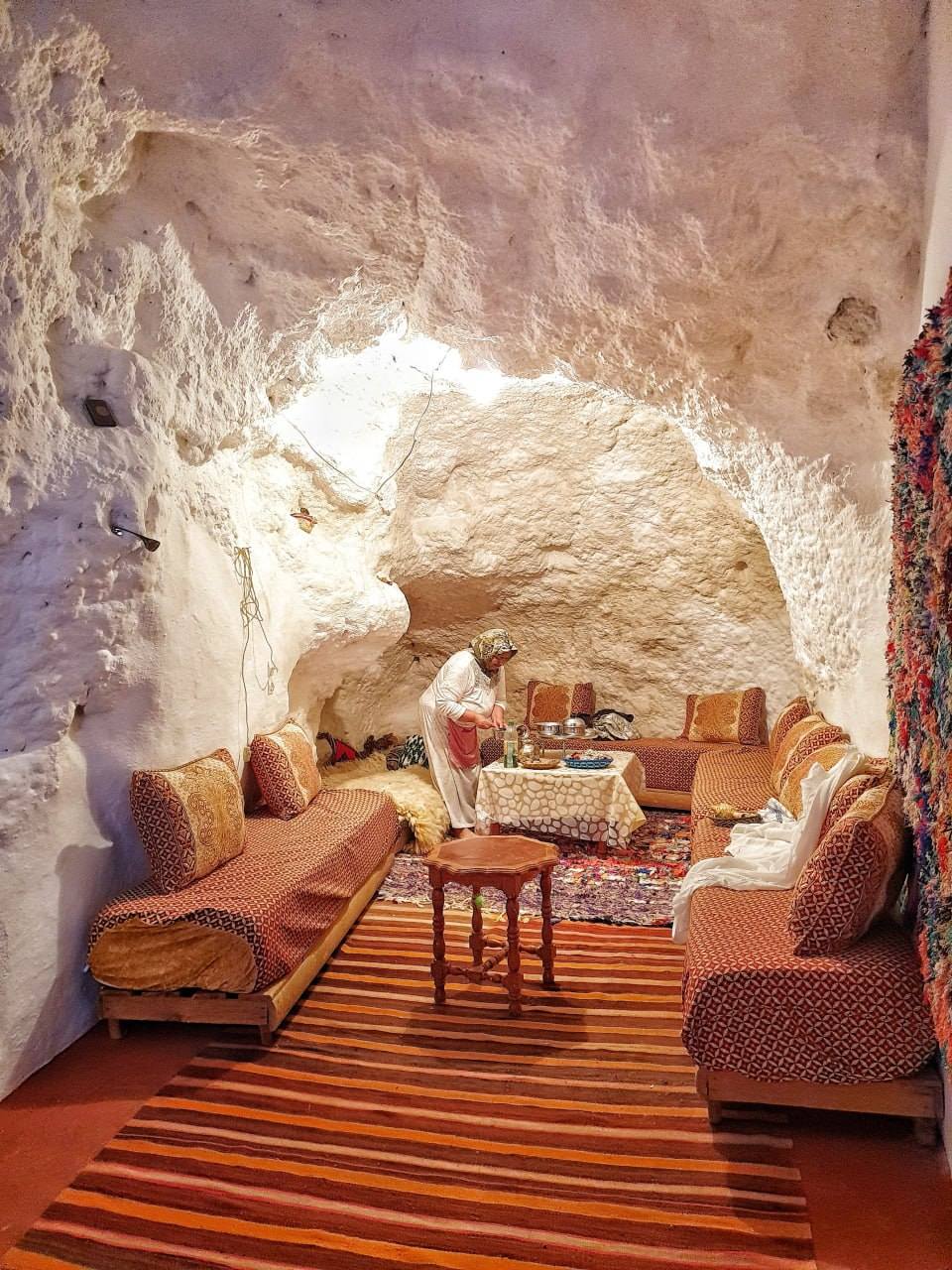


Tucked into the limestone cliffs just past the olive groves of Sefrou lies Bhalil — a Berber village that has fascinated travelers for centuries. The most striking feature of the village is its troglodyte homes: cave dwellings carved directly into the hillside, still lived in today by a handful of families.
These caves are not symbolic relics. They are working homes — single large rooms used for cooking, sleeping, and daily life, with walls of raw limestone and modern furniture sitting side by side with the ancient rock. Thanks to the soft limestone, the interiors stay naturally temperature-stable year-round, a feature that has kept families settled here for generations.
The tour also takes you through the village’s other defining tradition: the hand-weaving of silk djellaba buttons (locally called Aakad). Bhalil is the primary supplier of these intricate hand-woven buttons used on every traditional djellaba and caftan in Morocco. Throughout the village, groups of women sit together in doorways, weaving as they talk, laugh, and pass the day. For them, the craft is as much a social ritual as it is an income.
Bhalil’s history runs deeper than its caves. The village has long maintained trading ties with the Jewish community of Sefrou, supplied agricultural goods to Fez, and even played a role in the resistance against French colonial forces during the Protectorate. It’s the kind of place where every alley has a story — and where having a local guide is the difference between seeing the village and actually understanding it.
Highlights
- Visit Bhalil's centuries-old inhabited cave dwellings
- Meet Um Aicha, the village's most beloved cave-dwelling host
- See the silk djellaba button (Aakad) artisans at work
- Walk the pastel-painted alleyways of the upper village
- Discover Bhalil's role in resisting the French Protectorate
- Panoramic view over Sefrou and the Middle Atlas foothills