
Just 28 kilometers south of Fes, hidden in the foothills of the Middle Atlas Mountains, lie two of Morocco’s most quietly remarkable places: Sefrou, a 1,000-year-old multicultural town once known as “Little Jerusalem,” and Bhalil, a Berber village where families still live in caves carved directly into the cliffs. This is the Morocco that international tourism forgot — and the one locals hope you’ll come see.
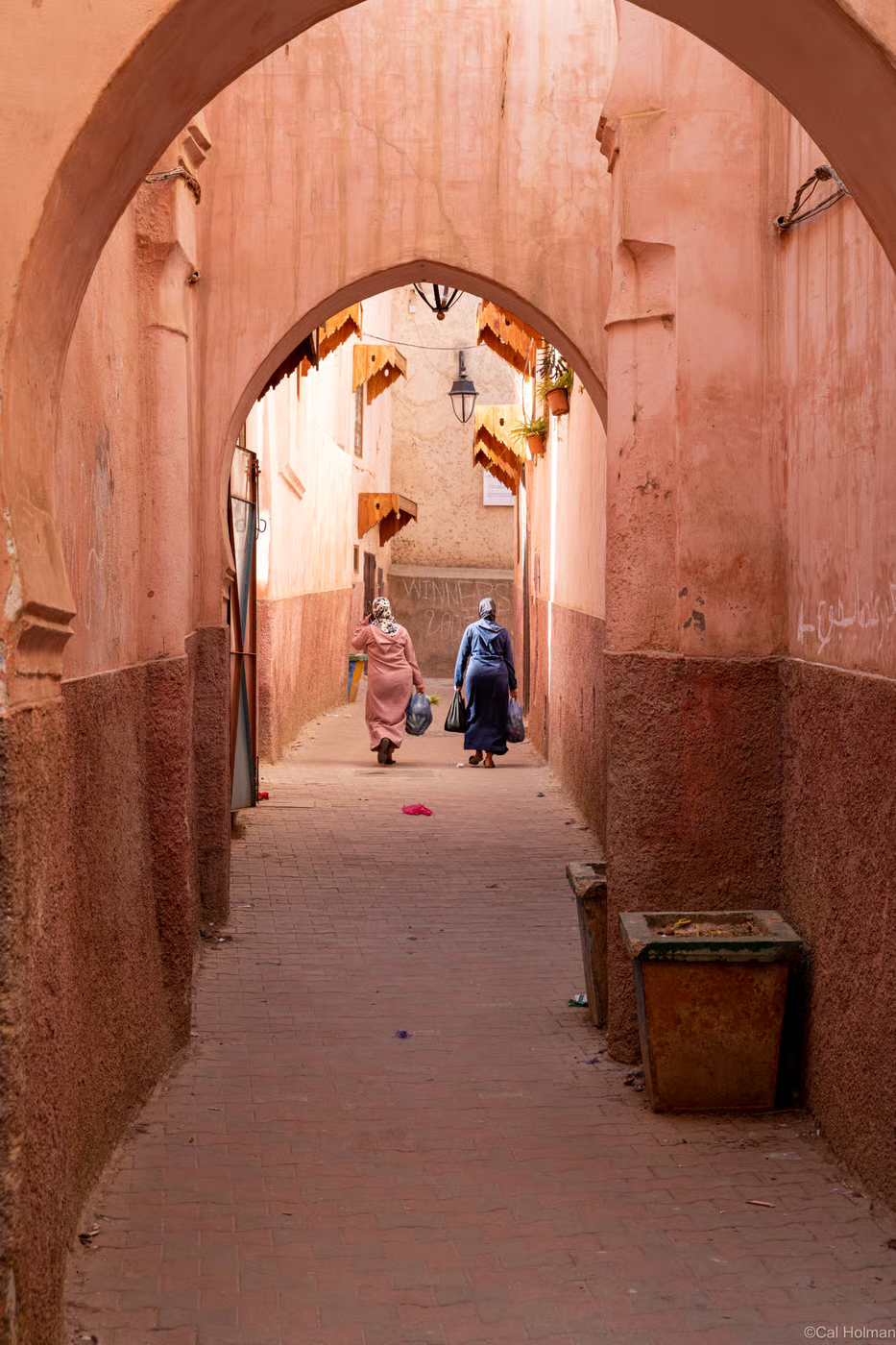
For centuries, Sefrou was a vital crossroads between the Mediterranean and the Sahara — a place where Berbers, Arabs, and Jews lived side by side and built one of the most religiously diverse communities in North Africa. Today, the old town still bears the marks of that shared history: a well-preserved medina, the historic Jewish mellah, ancient caravan posts, and the river Oued Aggai flowing through the heart of it all.
Sefrou sits at 850 meters of elevation, blessed with cooler summers, mountain springs, and some of the most productive cherry orchards in Morocco. Every June, the town hosts its legendary Cherry Festival, the oldest festival in the country — recognized by UNESCO in 2012 as part of the Intangible Cultural Heritage of Humanity.
Among the oldest medinas in Morocco, Sefrou's old town is smaller, calmer, and more walkable than the famous medina of Fes. The perimeter walls remain remarkably well-preserved — a rare glimpse into pre-colonial Moroccan architecture. The river Oued Aggai cuts the medina in two: the Muslim quarter on one side, the Jewish mellah on the other.
Sefrou was once home to one of Morocco's largest Jewish communities — close to 8,000 people. While most left in the mid-20th century, the mellah preserves its distinctive wooden balconies, narrow tunnel-like alleys, and the town's last remaining synagogue. The interior woodwork and original Hebrew-language texts on the library shelves are still intact.
A 1.5 km walk from the medina, Sefrou's cascades are a hidden natural pool tucked into the mountain foothills, surrounded by forest. Historically the town's only freshwater source, the cascades still feed local hammams through an ancient aqueduct that residents continue to rely on today.
A small but legend-rich set of stone steps on the route to the cascades. Locally believed to have a connection to purgatory and the day of reckoning, the "Stairs of Satan" are visually modest but rich in folklore — exactly the kind of detail a local guide brings to life.
Held every June since 1920, the Moussem Hab al-Molouk ("Festival of Royal Love") draws 400,000–500,000 visitors. Three days of Berber music (Ahidus), equestrian Fantasia displays, parades, and the famous crowning of "Miss Cherry." UNESCO-listed since 2012.
On the outskirts of Sefrou, these mystical caves are tied to local legend — some traditions place the resting site of the prophet Daniel here. The site has been a place of pilgrimage and shared reverence for both Muslims and Jews for generations.
The patron saint of Sefrou, whose mausoleum sits on the hill overlooking the town. The gardens offer one of the best panoramic views of the medina and the surrounding Atlas foothills.


A short drive from Sefrou, past terraced olive groves and limestone cliffs, lies Bhalil — a village unlike anywhere else in Morocco. Built directly into the soft limestone of the mountainside, Bhalil is one of Morocco’s last living troglodyte settlements: a place where families have lived inside cave dwellings for generations, and where a few elders still do today.
The caves of Bhalil are not ruins. They are working, lived-in homes — single large rooms used for cooking, sleeping, and daily life, naturally cool in summer and warm in winter (a consistent 18–20°C year-round). While many residents have moved to modern houses on the surface, a handful of families still welcome travelers inside their cave homes for mint tea and conversation.
One of the village's most beloved hosts is Um Aicha, who has lived in her cave for nearly 90 years. A visit with her is one of the most authentic encounters you can have in Morocco.
Bhalil is also the country's primary producer of handmade silk buttons — the Aakad — used on every traditional djellaba and caftan sold across Morocco. Throughout the village, you'll see groups of women sitting in doorways, hands flying as they weave colorful silk threads into tiny intricate globes. For them, it's not just a craft — it's a daily social ritual.
Bhalil's homes are painted in soft pinks, blues, and yellows that climb the mountainside in a colorful vertical labyrinth — often compared to Chefchaouen, but quieter and far less touristy.
Historically, Bhalil maintained close trading ties with the Jewish community of Sefrou, exchanging textiles, metalwork, and agricultural goods. During the French Protectorate, residents participated in the resistance against colonial forces — a chapter of Moroccan history that locals still recount with pride.

From Fes, both towns are an easy 30–45 minute drive south. The simplest options are:
Most visitors combine Sefrou and Bhalil in a half-day or full-day trip from Fes.

Authentic guided tours of Sefrou, Bhalil cave village, and the Middle Atlas — led by a native Berber guide. Real Morocco, real stories, real people.
© 2026 Morocco Hidden Tours. All rights reserved | Created by ELVAR Digital Agency
WhatsApp us